
How to Stop Ice Dam Water Damage and Ceiling Stains in Winter
Winter snow may look harmless, but it can create serious problems above your ceiling. Ice dams trap melting snow along your roofline and push water under shingles, where it can soak insulation and stain drywall. If you own a home in a cold climate, you need to act quickly to prevent a costly roof leak in winter. Repeated freeze-thaw cycles in cold climates make this problem even worse.
Why Ice Dams Cause Indoor Leaks
Ice dams form when heat from your attic escapes and warms the roof deck. Poor attic insulation, air leaks around fixtures, and inadequate ventilation allow warm air to rise and escape, which accelerates uneven roof melting. Snow melts, runs down the slope, and refreezes at the colder edge of the roof. That ridge of ice blocks drainage and forces water back under shingles. Once water penetrates the roof system, it can trigger ice-dam water damage, soak insulation, and create an attic leak ice dam problem that spreads into ceilings and walls.
Early Warning Signs of Ice Dam Damage
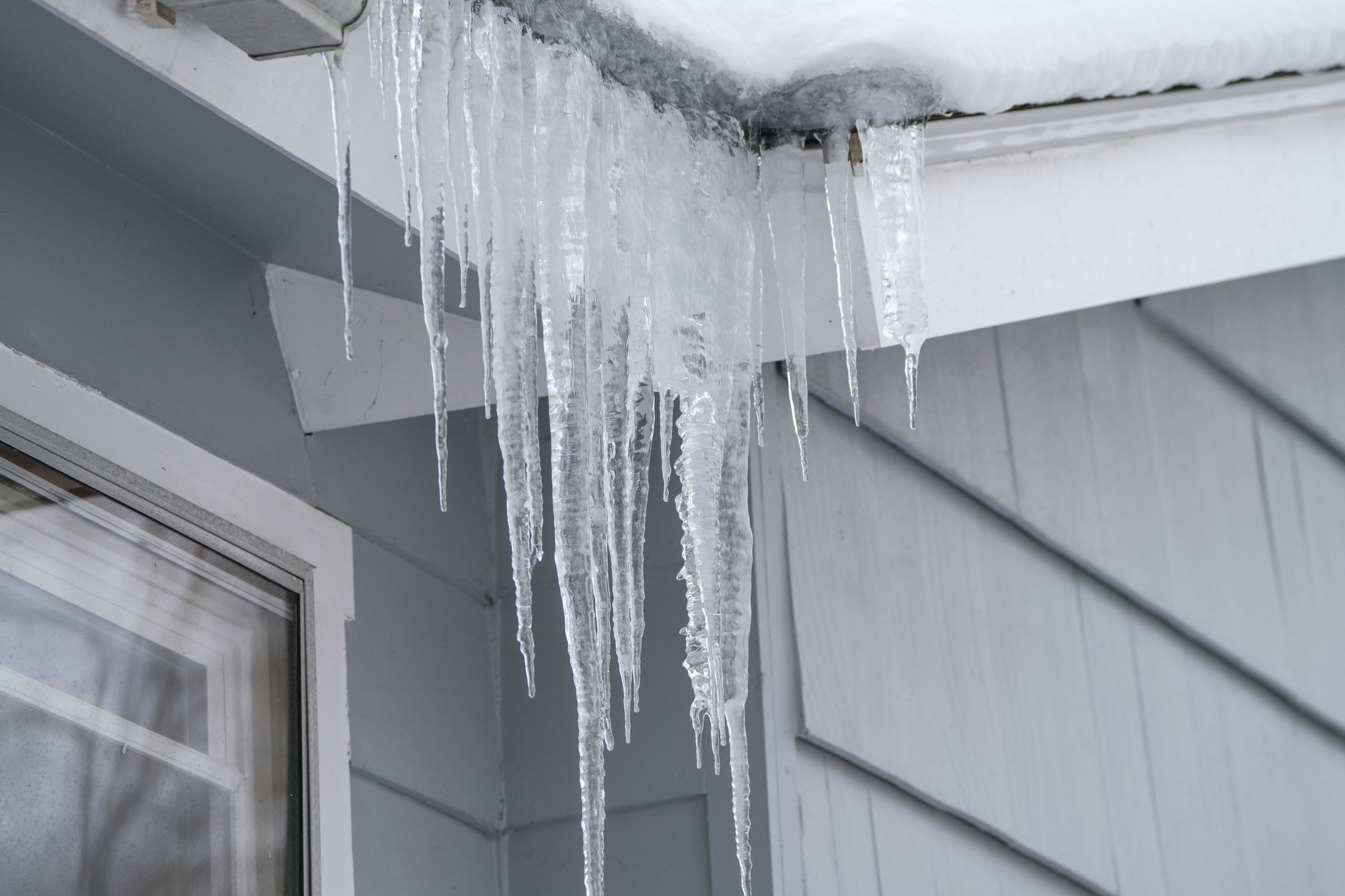
Watch for subtle signs before damage spreads. You may notice ceiling water stains in winter, peeling paint, or damp drywall near exterior walls. In the attic, look for wet insulation, frost buildup, or darkened wood sheathing. A musty odor can signal trapped moisture. Large icicles hanging from gutters can also signal trapped meltwater behind an ice dam.
Early detection helps you reduce structural damage, prevent mold growth, and stop a small leak before it becomes a major roof leak in winter.
What to Do Tonight to Mitigate Ice Dam Damage
Act quickly to reduce ice dam risks. From the ground, use a roof rake to clear excess snow from the roof eaves and reduce meltwater buildup. Catch dripping water with buckets and protect the flooring with plastic sheeting. Place a fan in the attic to lower roof deck temperatures and slow additional melting. If safe, remove wet insulation near the leak to limit moisture spread and reduce further ice dam water damage.
What Not to Do When Dealing With Ice Dams
Avoid actions that could worsen the damage. Do not chip away at the ice with a shovel or hammer. You can crack shingles, creating new entry points for water. Do not spread rock salt across the roof. Salt corrodes metal flashing and shortens the life of roofing materials. Avoid climbing onto an icy roof, especially at night. Slips and falls cause serious injuries and rarely solve the underlying drainage problem.
Drying and Insulation Risks
Once water enters your attic, drying becomes urgent. Wet insulation loses its thermal resistance, allowing more heat to escape, which can worsen ice buildup and trigger repeated ice-dam issues in the attic. Moisture trapped inside ceiling cavities also increases the risk of mold growth and wood deterioration. Mold can begin developing within 24 to 48 hours after materials become saturated. Dry affected areas quickly using controlled airflow and dehumidification. Replace saturated insulation to restore proper temperature control and prevent future ice dam water damage.
When Restoration Is Needed
Quick mitigation steps are not always enough. If water continues to spread, insulation remains saturated, or drywall begins to sag, you need professional help. Ongoing moisture can turn a small winter roof leak into structural damage and mold growth. Moisture often spreads behind drywall and under flooring, where it is not visible without professional moisture-detection tools.
A professional restoration team will remove damaged materials, dry hidden cavities, and restore insulation performance before problems escalate. Taking actionable steps quickly helps you reduce repair costs and protect your home’s structure.
Protect Your Home Before Damage Spreads
Ice dams can escalate quickly from minor staining to structural repairs. Act early to reduce moisture intrusion and protect insulation, drywall, and framing. If leaks continue or interior damage spreads, take action now.
When disaster strikes, Steamatic understands that you just want to get your life back to normal. We are available 24/7 to respond to your emergency.
Photo Credit: ND700